


Art: Authentic Individual Expression
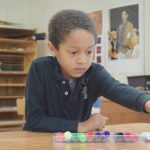
Our arts program aims to provide students with a stimulating range of opportunities to develop as young artists. Courses are designed to challenge students creatively while connecting their individual engagement to a broader awareness of larger cultural perspectives. In each discipline, the emergence of an individual voice or vision is supported by an awareness of historical context and a sense of art’s potential for engaging contemporary issues. The curricula also recognize the important role of technology as a vehicle of artistic expression, utilizing these tools alongside more traditional forms.
Performing Arts
With Star 2B Performing Arts on our campus, all students have access to their incredible offerings at a generous discount, including stage productions in the James Earl Jones Theater and several enrichment classes. Depending on the season, Star 2B classes might include dance, introductory acting, improv, and more. Recent performances have included Annie, Mean Girls, Finding Nemo, and Mary Poppins.
Visual Arts
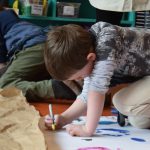
The visual art curriculum engages students in the production and critical analysis of works of art that are an iteration of larger issues and topics. The studio courses will introduce problems that underscore the relationship between thinking and making: that art production is concept-driven—a way of making ideas manifest in visual form. A life drawing course, included in tuition fees, will be offered after school. A portfolio course will also be offered for students who wish to further hone their craft. As our Navigators approach the college application process, they will receive college counseling with respect to BA programs with Studio Art majors as well as BFA art school programs. Art courses include:
- Exploration in Drawing, Collage, and Material
- Portfolio
- Art History: Renaissance to Baroque/Art and the idea of Beauty
- Life Drawing (after-school elective)
Music Education and Appreciation
The music program at The Navigator Institute consists of regularly scheduled co-curricular ensemble opportunities and private lessons on campus, both during and after school. The overarching goal is to enable students to explore a broad range of musical interests, nurture and develop their individual talents, examine the function of music within the context of global societies and cultures, acquire fundamental music skills, and develop the collaborative skills needed to participate in ensemble work. Music courses include:
- Pop Icons (after-school elective)
- Black Music in America
- The American History of Rock and Roll
- World Music and the Roots of Modern Western Music
- Music in America
- Composition and Recording Intensive
- Music Ensemble
Physical Education
Through the promotion of lifelong fitness activities and skills. A variety of options are available for students, including an indoor basketball court, outdoor soccer fields, and access to our weight training room. By promoting developmentally appropriate fitness, the program as a whole will instill knowledge and skills that students can carry forward. Activities might include Badminton, Basketball, Pickleball, Dodgeball, Frisbee, Kickball, Personal Fitness, Skiing/Snowboarding, Softball, Volleyball, Walking, and others by demand.
Health and Wellness
The Navigator Institute’s program places high value on wellness education and recognizes the impact that health has on students and their academic learning. We believe that a balanced life is important. Learning the important non-academic skills to navigate the social landscape and to stay safe is crucial. Our Life Skills and Health curriculum will be delivered to 9th graders by PE health staff with assistance from invited guests and outside organizations. We will support students in learning about physical and emotional health, as well as skills such as communication and self-advocacy. The curriculum will cover such topics as:
- Social dynamics, healthy friendships
- Communication skills: conflict resolution, problem-solving, assertive vs. aggressive behavior, constructive ways of expressing feelings
- Basic nutrition and healthy lifestyles
- Depression, self–injurious behavior, and suicide
- Eating disorders
- Sexually transmitted infections
- Stereotypes and discrimination
- Internet abuse and bullying behaviors; sexting
- Self-empowerment around sexual relationships. Recognizing and stopping unsafe situations
- Drugs, alcohol, and tobacco use and abuse
- Stress and anxiety
- Family dynamics
- Growth and development